
Make Winning Unbearable
How Underdogs Beat Favorites by Raising the Cost of Victory

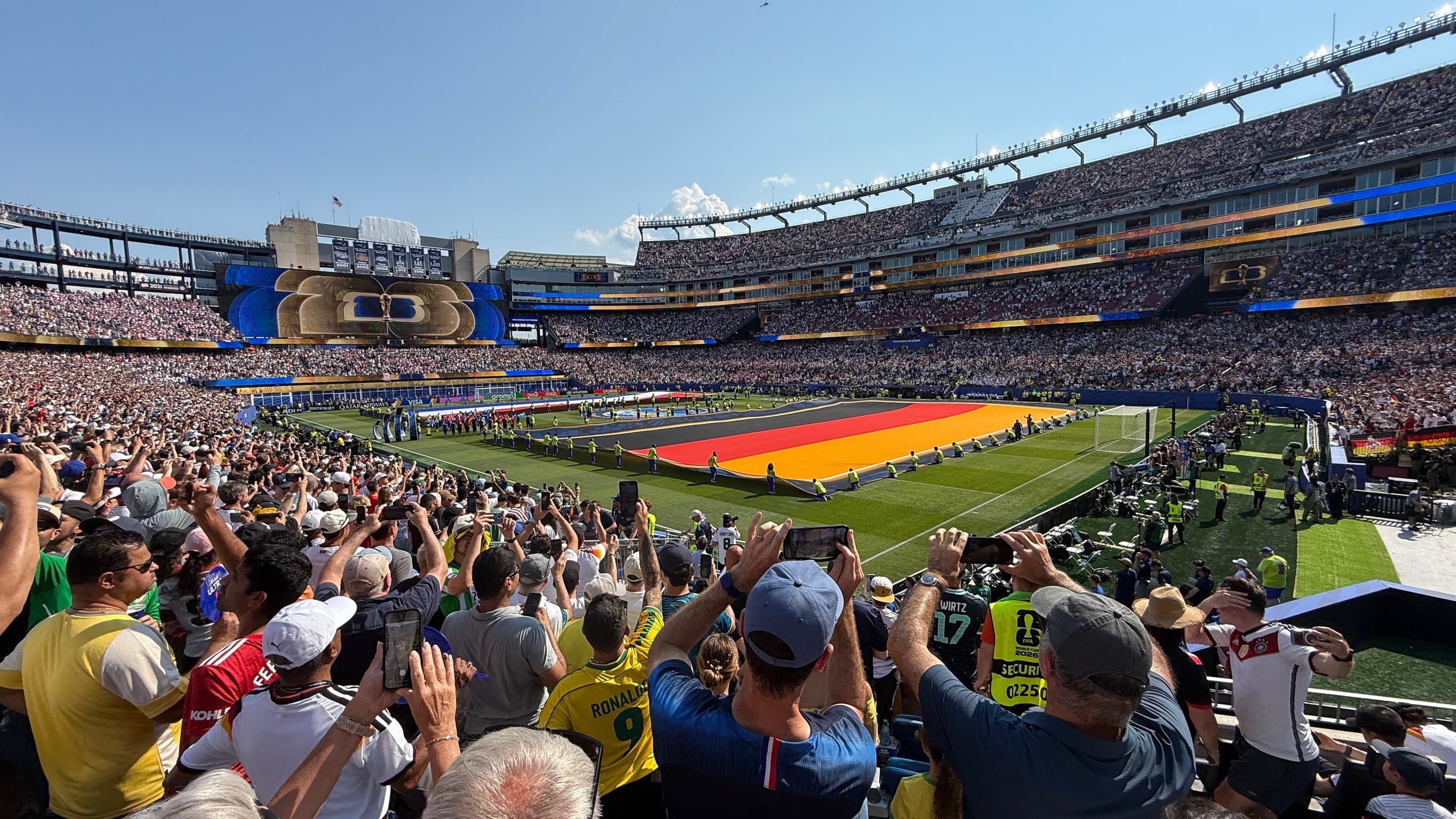
(Please note some links below are affiliate links where I may earn a small commission at no extra cost to you.)
“Today was a match in which we had to be Paraguay more than ever.”
— Gustavo Gómez, Paraguay captain
On June 29th, I was in the stands at Gillette Stadium when the four-time World Cup champions lost to a team nobody gave a chance.
Germany had the ball. Germany had the territory. Germany had 1.49 expected goals to Paraguay’s 0.42 across 120 minutes. Germany had never lost a penalty shootout in World Cup history.
And Germany went home.
Paraguay — ranked 41st, roughly 5-to-1 underdogs, a side that had scored just twice in the entire group stage — knocked them out on penalties anyway. Afterward, their captain explained the method. Germany, he said, knew that to beat them, “they would have to sweat blood, because we were going to make defeat very, very costly.”
That sentence is the strategy. Paraguay didn’t outplay Germany. They made winning unbearable.
The game underneath the game
A while back I wrote about Simon Ramo’s Loser’s Game.

In amateur tennis, his finding was that roughly 80% of points are lost on unforced errors, not won on brilliant shots. The amateur beats himself. The victor is simply whoever makes the fewest mistakes.
Germany played a Winner’s Game. Press, dominate, force the moment of brilliance. Paraguay played a Loser’s Game on purpose. Absorb, stay organized, refuse to trade blows, and let the favorite’s own overreach do the damage. Charlie Munger put the philosophy this way:
“It is remarkable how much long-term advantage people like us have gotten by trying to be consistently not stupid, instead of trying to be very intelligent.”
Paraguay was consistently not stupid for 120 minutes. That was enough.
Which team are you?
Right now, in your league, you are one of two teams.
You are Germany — the roster that looked strong on draft day, the manager sitting near the top of the standings in early July. Or you are Paraguay — outgunned on paper, the side nobody in your league is worried about.
If you’re Germany, your real opponent isn’t the rest of the league. It’s your own complacency. In The Process, Jeff Zimmerman and Tanner Bell name it: overconfidence bias, the tendency to believe we know more than we do and that we’re right more often than history shows. It shows up as the lineup you don’t tweak, the waiver deadline you coast through, the match-up you don’t bother to study. Your projected standings are 1.49 expected goals. They are not the final score.
If you’re Paraguay, the instinct that will kill you is trying to out-muscle the leader. That’s playing Germany’s game, and you’ll lose it. You climb back the way Paraguay did — by minimizing your own mistakes and letting the favorite beat himself.
But here’s the crucial distinction. Paraguay didn’t play a Loser’s Game because defense is noble or because they were being passive. They played it because it was the only game they could win against Germany.
The real rule is this: know which game you’re in.
Inside your circle of competence, where you hold a genuine edge in process or information, play aggressively to win. Outside it, or when you’re clearly outmatched on paper, play the Loser’s Game on purpose. Discipline isn't the absence of aggression; it's aggression aimed at the right target. Germany's mistake wasn't ambition. It was mistaking possession for progress. Playing to win still means not beating yourself.
For the team trying to hang around, that looks concrete:
Set your FAAB bids midweek and walk away. The panicked Sunday-night overbid, fired off hours after a bad week, is the double fault into the net. Vlad Sedler’s FAAB primer is built on exactly this: decide early, step back, return with a fresher head.
Stop reaching in drafts. The Process: 2024 Appendix found that every unit of pick-reach beyond ADP has historically cost roughly 48.5 overall points. Trying to look brilliant is often the mechanism of losing.
Manage boring. The investor who earns average returns for above-average duration ends up in the top 1%. Do the same: draft solid, execute consistently, and stop making three unnecessary moves a month.
The takeaway
Pull up your league standings right now. Are you Germany or Paraguay?
Then the harder question: are you playing like the one you are? The favorite who assumes he can’t lose and the underdog who tries to out-slug the leader are making the identical mistake from opposite ends of the table.
Paraguay’s goalkeeper said it best, walking off the pitch while his teammates wept: “It showed that you shouldn’t speak too soon.”
The season isn’t won in July. It isn’t lost there either.
Be Paraguay.